Author’s practical guidance

Agreeing on the words before you need them

Source named in the book: coparenting research (Feinberg) · Positive Discipline (Nelsen)

Every situation in this book is easier when both adults use the same sentence, and almost no couple ever sits down and agrees on sentences.

Say this now

Option 1
“What do we both say when she does that?”

The most useful sentence in this book. Ask it about one situation at a time.

Option 2
“Let's use yours.”

The words matter less than both of you using the same ones.

Do this

  • Pick the three situations that happen daily and agree the words for those only.
  • Say them out loud to each other. Written words sound different in a hallway.
  • Stick them somewhere visible for two weeks. The fridge is fine.
  • Review after two weeks and change whatever did not survive contact.
  • Tell whoever else looks after the child, in the same words.

Avoid this

  • Agreeing on principles and assuming the words will follow.
  • Deciding the rule while one of you is holding a screaming child.
  • Insisting on your exact wording. Close enough is close enough.
If it repeats

If agreeing the words keeps not happening, do it for one situation rather than all of them. One shared sentence that both of you actually use beats a full agreement that neither remembers.

Why the book suggests this

Every situation in this book is easier when both adults use the same sentence, and almost no couple ever sits down and agrees on sentences. They agree on values — kindness, firmness, no shouting — and then improvise the words in the worst possible conditions.

A child does not experience your values. They experience the sentence they hear at the door, and whether it is the same sentence from both of you.

From this collection

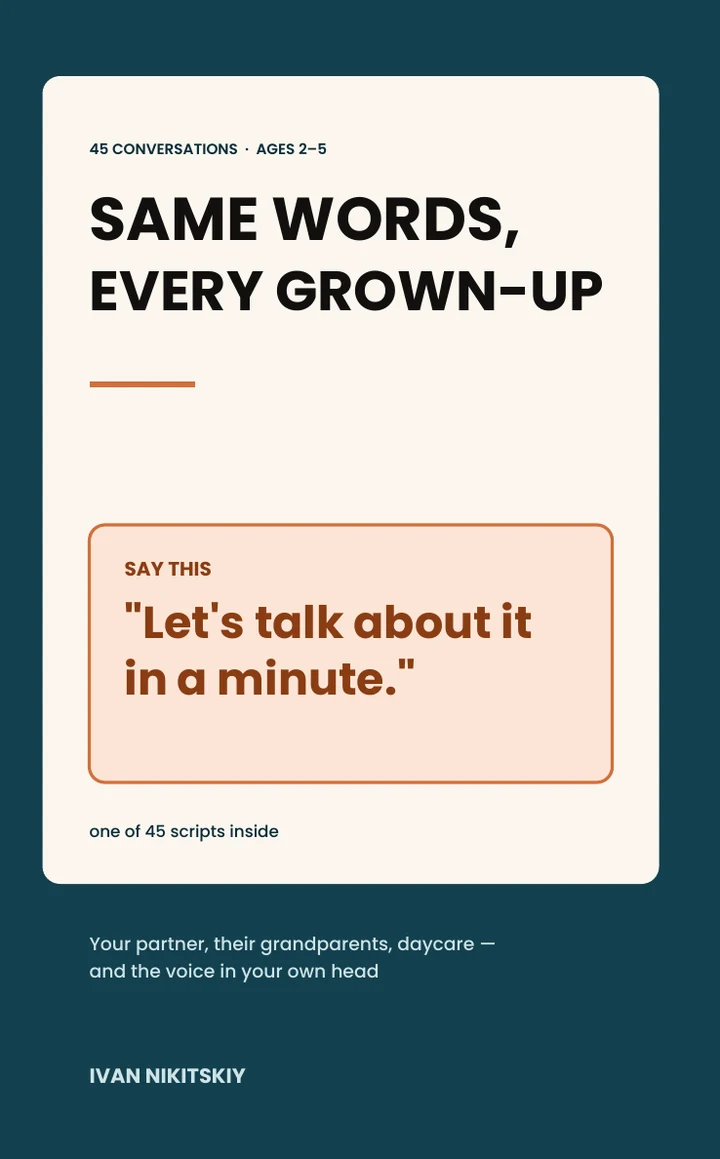
Same Words: Every Grown-Up

45 prepared situations in this family area.