Author’s practical guidance

Where to go and what to say when you ask for help

Source named in the book: AAP guidance on parental mental health

The commonest obstacle is not shame.

Say this now

Option 1
“I'm not coping the way I used to, and it's been going on for weeks.”

One sentence is enough to start an appointment. The rest is their job, not yours.

Option 2
“I need help with how I've been feeling since the baby.”

Works with any doctor, in any country, at any point in the first five years — or later.

Do this

  • Start with your own family doctor. They will know the local route.
  • Say the worst sentence first. It gets easier immediately afterwards.
  • Ask specifically what is available: talking therapy, medication, a group, a home visitor.
  • Ask about waiting times and what to do in the meantime.
  • Take somebody with you, or tell somebody the same day.

Avoid this

  • Waiting until you can describe it well.
  • Booking with somebody you will have to see socially.
  • Starting with "it's probably nothing, but."
If it repeats

If the first person you ask does not help, ask a second. That is not unusual and it is not a reason to stop. Help for parents exists in every system — it is often badly signposted rather than absent.

Why the book suggests this

The commonest obstacle is not shame. It is not knowing what to say. Parents rehearse an explanation that will sound serious enough to justify the appointment, fail to construct one, and cancel.

You do not need an explanation. You need three sentences and a date.

From this collection

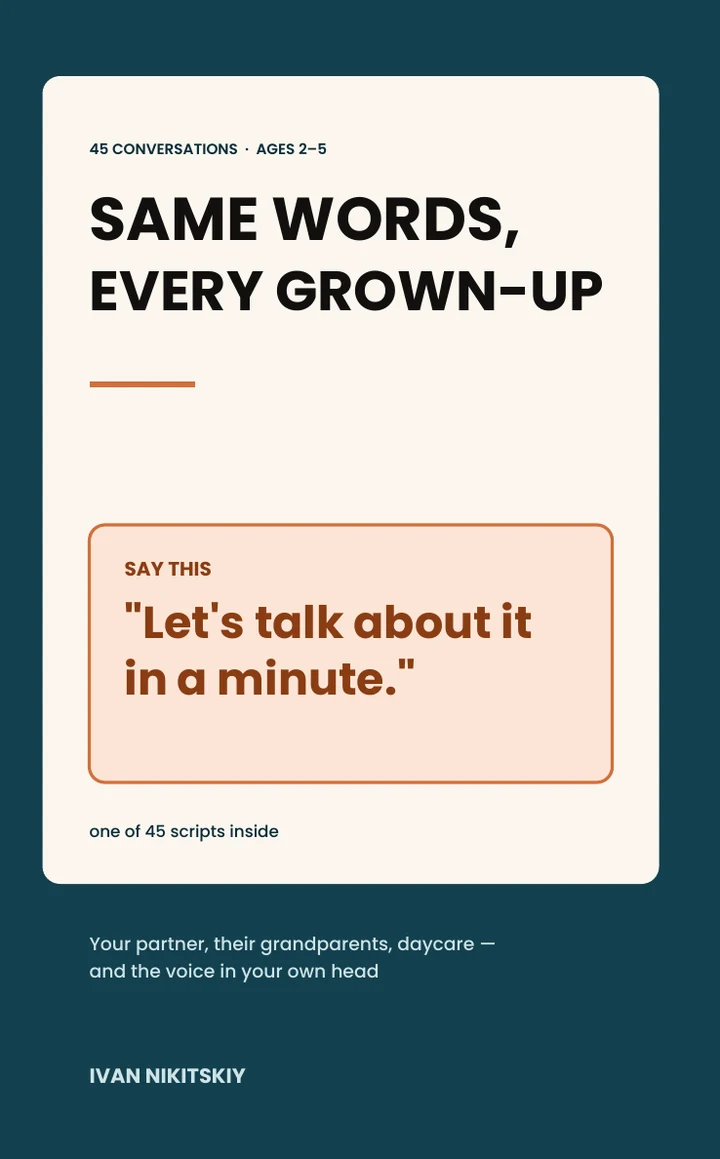
Same Words: Every Grown-Up

45 prepared situations in this family area.