Author’s practical guidance

The ten minutes that prevent meltdowns

Source named in the book: PCIT · Positive Discipline (Nelsen)

A large share of hard behavior is a request for connection dressed up as something else.

Say this now

Option 1
“It's our special time. Ten minutes — you choose what we do.”

Announce it. The naming is part of what makes it count.

Option 2
(during play) "You put the blue one on top."

Describe, don't direct. Narration is the whole technique.

Do this

  • Same slot every day, phone in another room.
  • They lead, you follow: no questions, no teaching, no corrections.
  • Set a timer so the ending is the timer's job, not yours.
  • Do it when things are going well, not as a repair after they went badly.
  • Give it to each child separately if there is more than one.

Avoid this

  • "Not now, I'm busy" — said five times in a row.
  • Using the time as a reward: "If you behave, we'll play later."
  • Spending it directing the play: "Why don't you put the red one there?"
If it repeats

Ten minutes daily beats an hour on Sunday. If every day is impossible, protect the same slot on the days you can — predictable matters more than generous, and the effect takes about two weeks to appear.

Why the book suggests this

A large share of hard behavior is a request for connection dressed up as something else. Attention that cannot be had by being pleasant will be had by being difficult, and difficult works reliably. This is not manipulation; it is arithmetic.

Attention given freely is attention they do not have to fight for. Ten minutes that arrive unearned change the arithmetic, and the effect turns up far outside those ten minutes.

From this collection

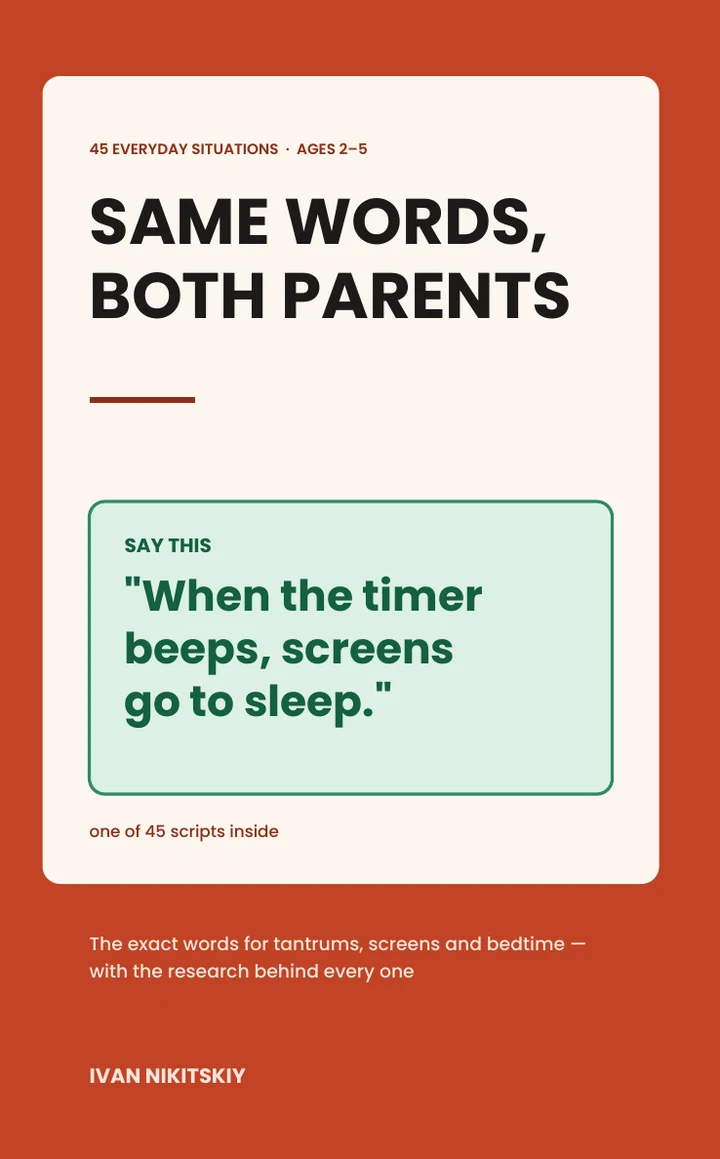
Same Words: Both Parents

45 prepared situations in this family area.