Author’s practical guidance

It touched the other food

Source named in the book: the division of responsibility in feeding (Satter)

A child who gags at a mixed texture is not performing.

Say this now

Option 1
“You don't have to eat it. It can stay at the side of your plate.”

Removes the threat. Food they need not eat is food they can look at — and looking is where trying starts.

Option 2
“Do you want them touching or not touching?”

Gives them control over the one thing that is the problem, at no cost to you.

Do this

  • Serve components separately, and let them mix or not.
  • Put one accepted food on the plate at every meal — they need something safe to eat.
  • Let them serve themselves when it is practical.
  • Drop the commentary on how much went in; it turns eating into a performance.
  • Offer it again in a few weeks without mentioning the last time.

Avoid this

  • "Just try one bite." — the bite becomes the negotiation, and the meal becomes a transaction.
  • Making a separate meal on demand — today's peace, tomorrow's two kitchens.
  • "You liked it yesterday!" — yesterday it was not touching the rice.

TALK TO YOUR DOCTOR IF

  • The list of accepted foods keeps shrinking.
  • A whole texture group has dropped out.
  • They gag at the sight or smell, not the taste.
  • Weight or growth has flattened off.
  • Mealtimes are the hardest part of the day.
Why the book suggests this

A child who gags at a mixed texture is not performing. Mouth and tongue register texture more finely than hands do, and a sauce that has crossed onto the potato has changed the food into something they have not agreed to eat.

Satter's division of responsibility settles who decides what: the adult chooses what is offered and when, the child decides whether they eat and how much. Pressure moves the fight from the plate to the relationship without adding a bite.

From this collection

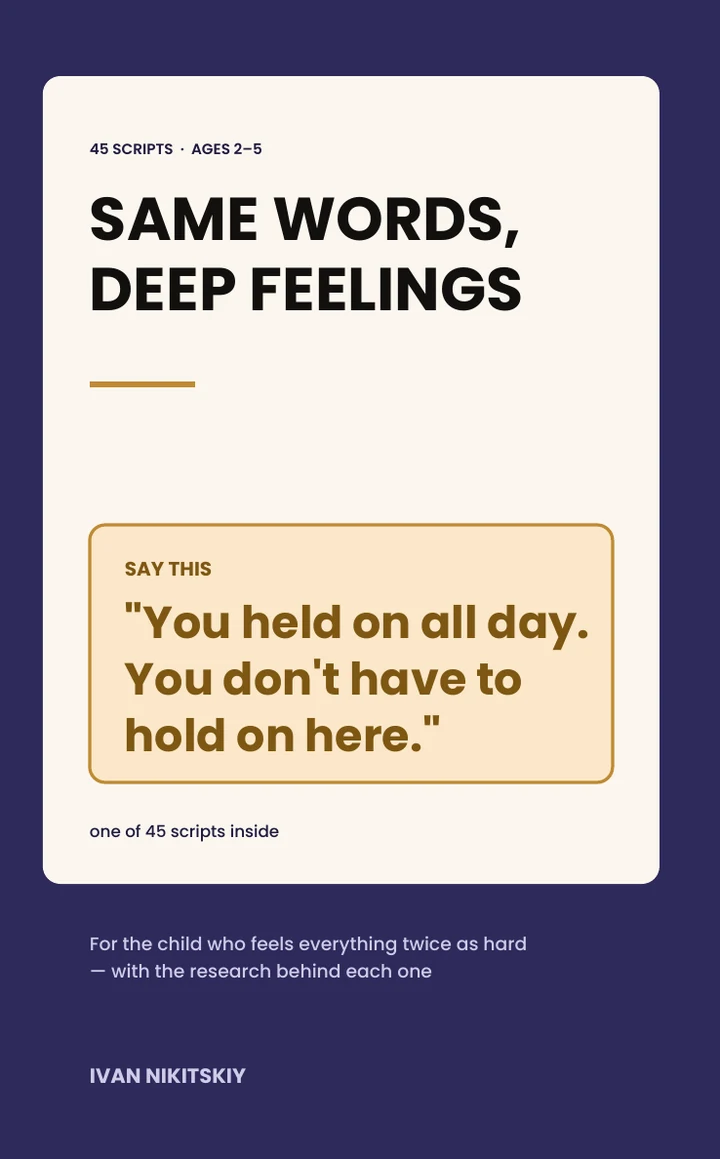
Same Words: Deep Feelings

45 prepared situations in this family area.