Author’s practical guidance

They caught your bad mood

Source named in the book: sympathy versus personal distress (Eisenberg)

Eisenberg draws a line between two things that look like caring.

Say this now

Option 1
“I'm in a bad mood today. It isn't about you and you don't have to fix it.”

Confirms what they detected, assigns it an owner and lifts the job off them. All three parts do work.

Option 2
“I'm going to make tea and then I'll feel better.”

Shows the state as something with an end, which is the part they cannot supply themselves.

Do this

  • Name your mood in one short sentence, without the story behind it.
  • Say plainly that it is not theirs to repair, in those words.
  • Let them see you do something about it — a walk, a call, sitting down.
  • Keep the routine running on your flat days.
  • Tell them afterward that it passed, so the ending is visible too.

Avoid this

  • "I'm fine." — said while clearly not fine, it teaches them not to trust what they read.
  • Explaining the whole problem — accurate and far more than they can hold.
  • "Why are you being like this?" — the answer is that you are, and they noticed.
If it repeats

A child who monitors your face all day has learned that your state is their business. Say the small ones out loud regularly — good, tired, annoyed at the traffic — so reading you stops being detective work.

Why the book suggests this

Eisenberg draws a line between two things that look like caring. Sympathy is feeling for the other person and staying separate enough to help. Personal distress is catching the state yourself and needing it to stop for your own sake.

Small children land on the second far more often, and a child who reads adults closely lands there fastest. Which is why your quiet bad afternoon produces a child who is suddenly clingy and difficult. They have taken the state on board without any way to put it down.

From this collection

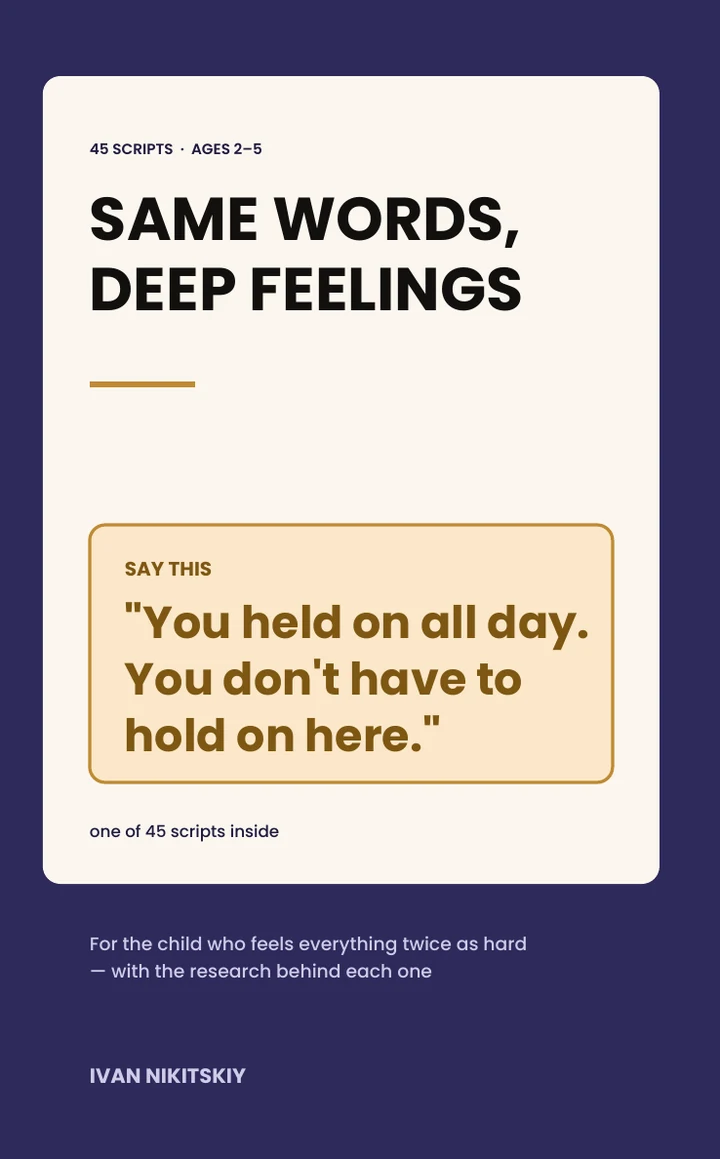
Same Words: Deep Feelings

45 prepared situations in this family area.