Author’s practical guidance
Shadows, wind and the house at night
Source named in the book: behavioral inhibition and sensory threshold (Kagan)
The room is not the same room after dark.
Say this now
“Let's look at your room from your pillow and fix what looks wrong.”
Done in daylight, this hands them a room they have inspected themselves.
“The house makes those sounds every night, awake or asleep.”
Puts the noise in the category of ordinary furniture rather than events.
Do this
- Lie on their pillow in the dark yourself and look at what they see.
- Move the coat, the hook, the mirror — outlines are worth more than explanations.
- Cover the window properly, so passing headlights stop crossing the ceiling.
- Give one steady sound all night to bury the irregular ones.
- Do the fixing in the day, never as a negotiation at bedtime.
Avoid this
- "It's just the heating." — a correct label does not make the noise stop arriving.
- Explaining each sound as it happens — you are teaching them to listen for the next one.
- Leaving the television on downstairs — voices they cannot place are the hardest sound.
If it repeats
If the room has been fixed and the fear stays, treat it as the same problem as the monster rather than a sound problem. What frightens them is being alone with their attention, and that is answered by predictable checking rather than by better soundproofing.
Why the book suggests this
The room is not the same room after dark. A coat on a door has an outline, the heating comes on, a car throws light across the ceiling — and all of it arrives at a child lying still with nothing else to attend to.
Kagan's inhibited children notice more of it and take longer to settle once they have. This is worth knowing because the fix is mostly physical rather than verbal: with this child, changing the room does more in a night than any amount of reassurance does in a week.

From this collection
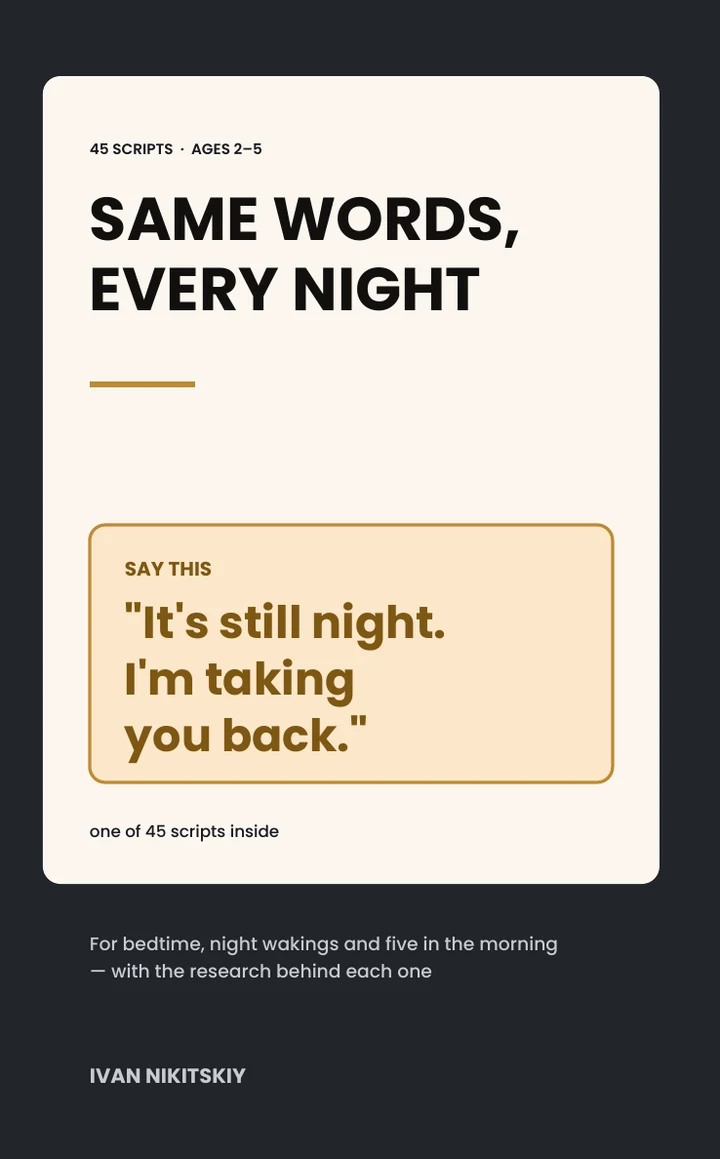
Same Words: Every Night
45 prepared situations in this family area.