Author’s practical guidance

Heavy and slow every morning

Source named in the book: pediatric sleep practice (Owens)

Most hard mornings are ordinary.

Say this now

Option 1
“Ten more minutes. Then I'll open the curtains.”

Light on a fixed schedule does more for waking than any amount of encouragement.

Option 2
“Same order every morning. Bathroom first.”

Half-awake children run on sequence, not on decisions.

Do this

  • Open the curtains first and leave the room bright.
  • Put the hard tasks last — dressing after breakfast, not before it.
  • Keep the wake-up time identical seven days a week for two weeks.
  • Lay everything out the night before so the morning holds no choices.
  • Watch the afternoon — car sleep at four is the sign worth acting on.

Avoid this

  • Waking them earlier to allow more time — you are taking the shortage out of the same account.
  • "Come on, everyone else is up." — they cannot make themselves alert on request.
  • A screen to get them moving — it becomes the only thing that works, permanently.

TALK TO YOUR DOCTOR IF

  • They still need waking after eleven hours in bed.
  • They fall asleep in the car after a full night's sleep.
  • Snoring, mouth breathing or pauses in breathing.
  • Morning headaches, several times a week.
  • Naps return months after they were given up.
Why the book suggests this

Most hard mornings are ordinary. A child who is slow, cross and unwilling to get dressed at seven is a child who was asleep at half past six, and no arrangement of clothes or breakfast changes that.

What is worth noticing is the pattern that does not fit. A child sleeping eleven hours who still cannot be woken, or who is asleep in the car by four most afternoons, is telling you the hours are there and the sleep is not — and in pediatric sleep practice that is a question about the quality of the night, not about the morning.

From this collection

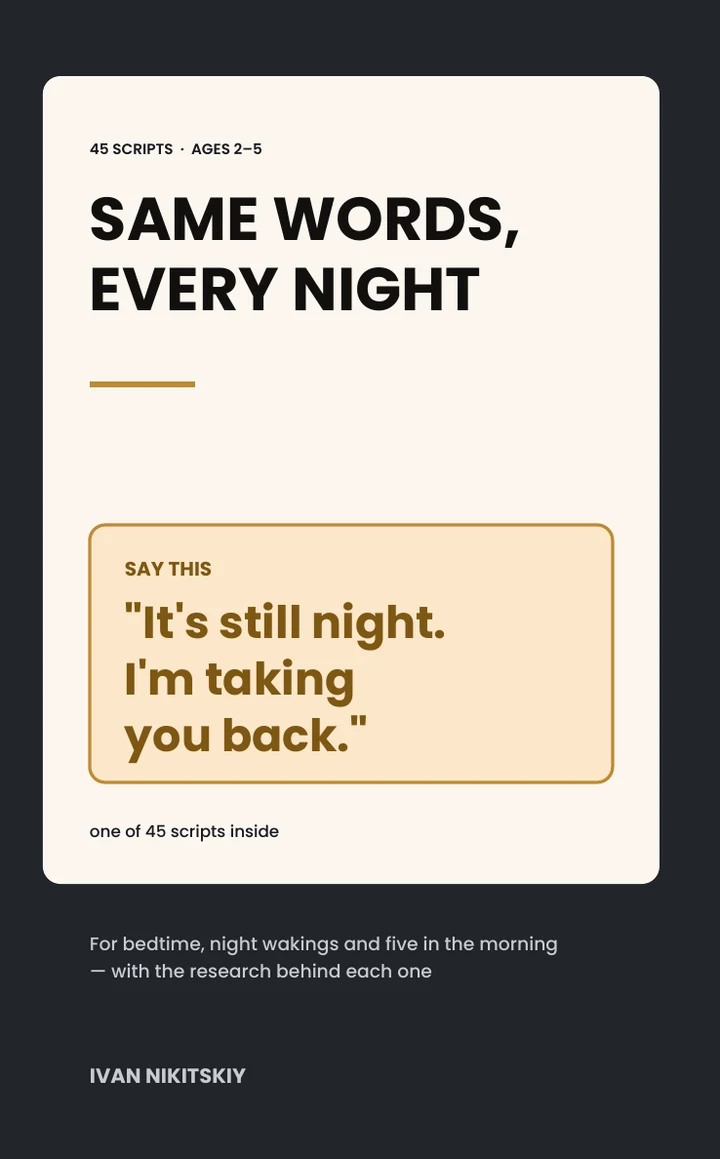
Same Words: Every Night

45 prepared situations in this family area.