Author’s practical guidance

One room, two children

Source named in the book: parent-run sleep plans (Hiscock)

The fear that they will wake each other is worse than the reality.

Say this now

Option 1
“Talking is over. You can each look at a book until you're sleepy.”

Ends the conversation without demanding sleep, which is the part they cannot deliver on request.

Option 2
“If one of you gets up, I take you both back. Nothing else happens.”

One rule for the room, so there is nothing to gain by being the one who starts.

Do this

  • Stagger the settling by fifteen minutes — put the harder one down second.
  • Give the earlier sleeper white noise and the later one a dim light.
  • Expect two or three weeks before the room settles.
  • Handle night wakings in the hall, not in the shared room.
  • Keep the same bedtime for both even when they are two years apart.

Avoid this

  • Waiting until they both fall asleep every night — you have become part of the room.
  • Splitting them up after one bad night — the first fortnight is the worst of it by design.
  • "You woke your brother!" — you handed one of them a reliable way to get a reaction.
If it repeats

If one child is genuinely being woken every night after a month, split the sleep rather than the room where you can — the same bedtime with one settled elsewhere for the first hour. Most families find the problem is the first hour and nothing else.

Why the book suggests this

The fear that they will wake each other is worse than the reality. Children who share a room habituate to each other's noise within a few weeks, and the child who cries is usually the only one awake in the morning who remembers it.

What does not solve itself is the hour before sleep. Two children in one room have an audience, a conversation and a reason to stay up, and in Hiscock's work the thing that settles this is a plan the adults hold to rather than a rearrangement of the furniture.

From this collection

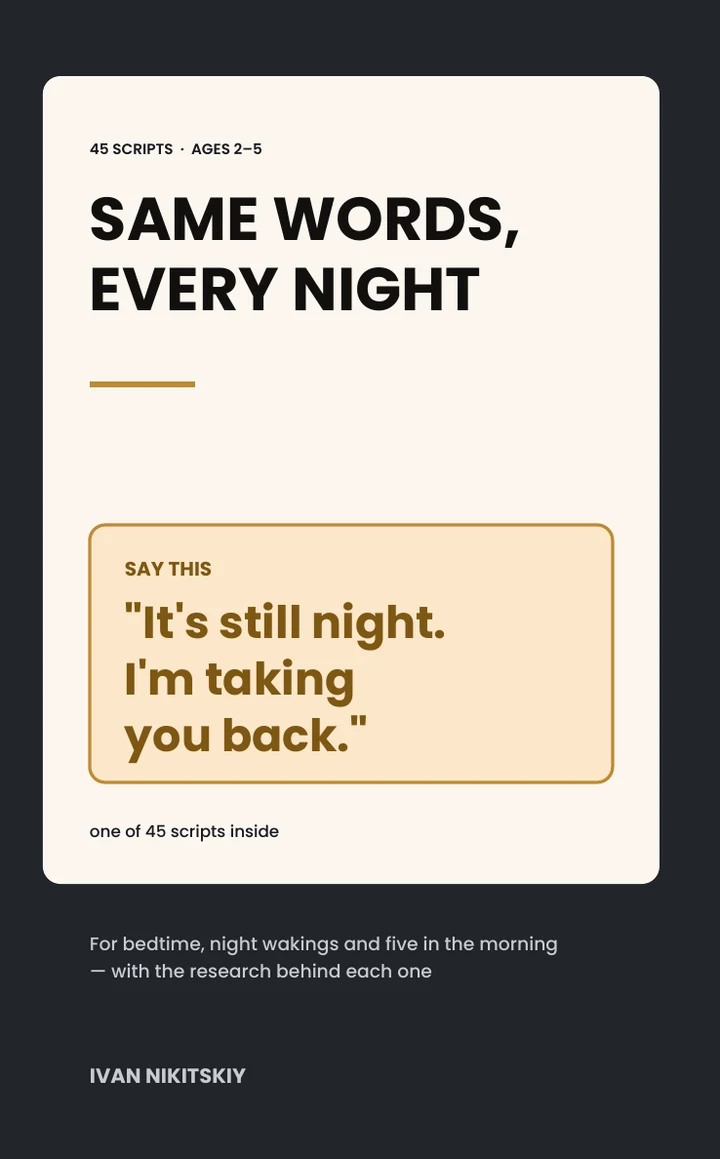
Same Words: Every Night

45 prepared situations in this family area.