Author’s practical guidance
Bedtime battles: "one more book, one more water"
Source named in the book: Positive Discipline (Nelsen)
Bedtime asks a child to give up two things at once: your company and control of their own evening.
Say this now
“Two books tonight. You pick both.”
The number is fixed, the choosing is theirs. Announce it before the first book, not after.
“That's a tomorrow question. Right now it's sleep time. I'll come and check on you.”
Ends the topic without ending the connection.
Do this
- Same order every night, ideally on a picture chart they can follow themselves.
- Front-load the needs — water, potty, hug — before lights out, so nothing is left to fetch.
- Answer stalls briefly and boringly. Length is what makes a stall worth trying.
- Decide the number of books in daylight, not at the bedroom door.
- Leave with the same sentence every single night.
Avoid this
- "That's it, no more books ever!" — a threat you will not keep, announced in front of a witness.
- Granting request number six because you are exhausted — it teaches request number seven.
- Arguing about whether they are really thirsty.
If it repeats
Give one golden ticket: a single extra request per night, and they choose when to spend it. It hands a child real control inside your limit — and most end up saving it rather than using it.
Why the book suggests this
Bedtime asks a child to give up two things at once: your company and control of their own evening. The requests that follow — one more book, water, a different pajama top — are attempts to hold on to both. Stalling is developmentally normal and almost never manipulation in the adult sense.
It also happens at the worst hour, when both of you are running on empty. Which is why the plan matters more than the willpower: at half past seven your judgment is not at its best, and a routine decided at noon will hold when improvisation will not.
Related prepared situations
What happened next?

From this collection
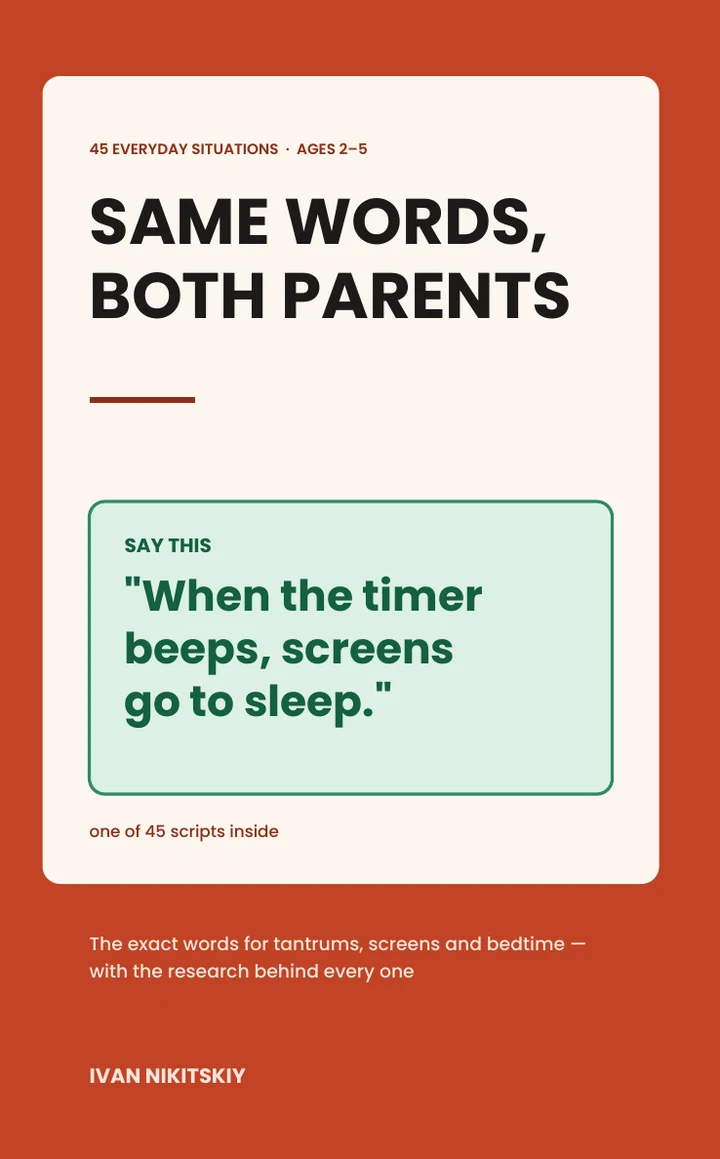
Same Words: Both Parents
45 prepared situations in this family area.