Author’s practical guidance

Fine all day, wrecked at the door

Source named in the book: effortful control and its cost (Rothbart)

Holding yourself together is work.

Say this now

Option 1
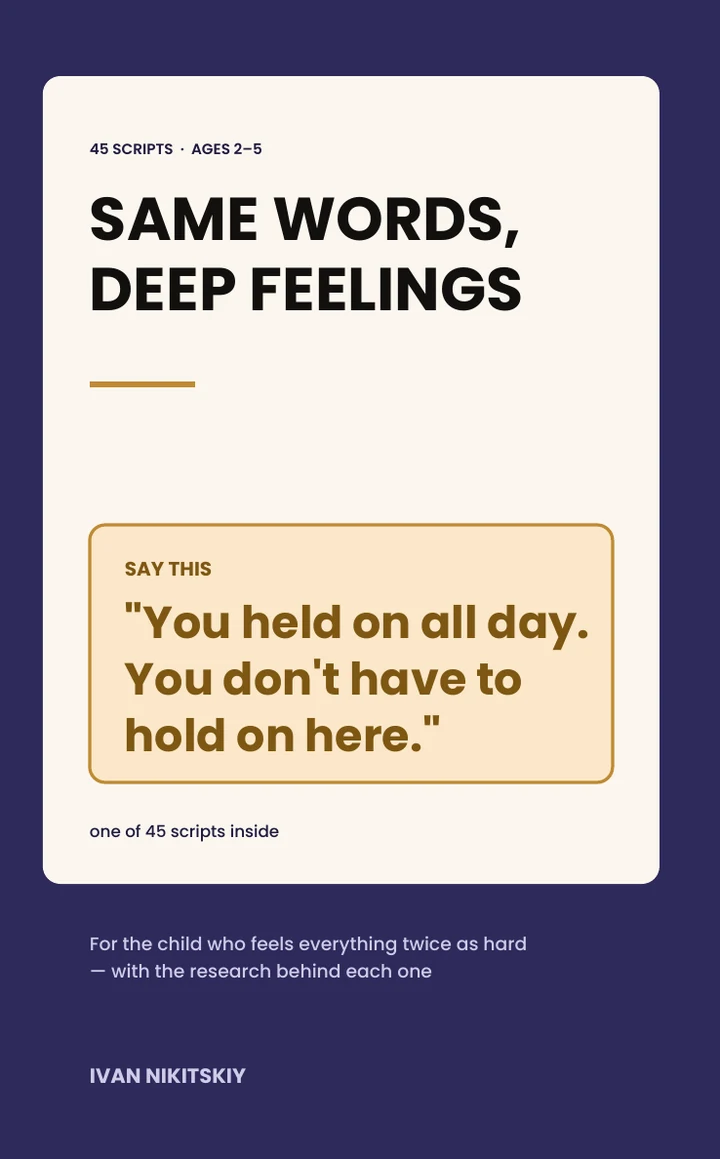
“You held on all day. You don't have to hold on here.”

Names the work they did and takes the requirement off. Most of what they need is permission.

Option 2
“Snack first. We'll talk later.”

Food and silence in that order. The conversation can wait an hour and will go better then.

Do this

  • Say almost nothing for the first fifteen minutes after pickup.
  • Have the snack ready in the bag, not waiting at home.
  • Skip the errand on the way back on days you have a choice.
  • Keep the after-school hour dull on purpose — no visitors, no screens to negotiate over.
  • Ask about the day at bedtime instead, when nothing is being demanded of them.

Avoid this

  • "Your teacher said you were perfect!" — they know. That is exactly what it cost.
  • Questions in the first ten minutes — each one asks for more of what just ran out.
  • "Why are you like this only with me?" — because only with you is it safe to be.
If it repeats

If the landing is rough every single day, the day itself may be too long rather than too hard. A shorter afternoon, one fewer activity or a later start changes more than anything you can do in the hallway.

Why the book suggests this

Holding yourself together is work. A child who spent six hours matching the volume of the room, waiting their turn and keeping their face right has been spending effort all day on things that cost you nothing.

It runs out where they are safest. That is the part worth understanding: the collapse is not a verdict on you or on home. It is what happens when a child finally reaches the one place where falling apart is allowed. The teacher's good report and the scene in the hallway are the same day.

Related prepared situations

What happened next?

From this collection

Same Words: Deep Feelings

45 prepared situations in this family area.