Author’s practical guidance
Two in the morning, at your bedside
Source named in the book: signaled waking and sleep onset (Sadeh)
Everyone surfaces between sleep cycles.
Say this now
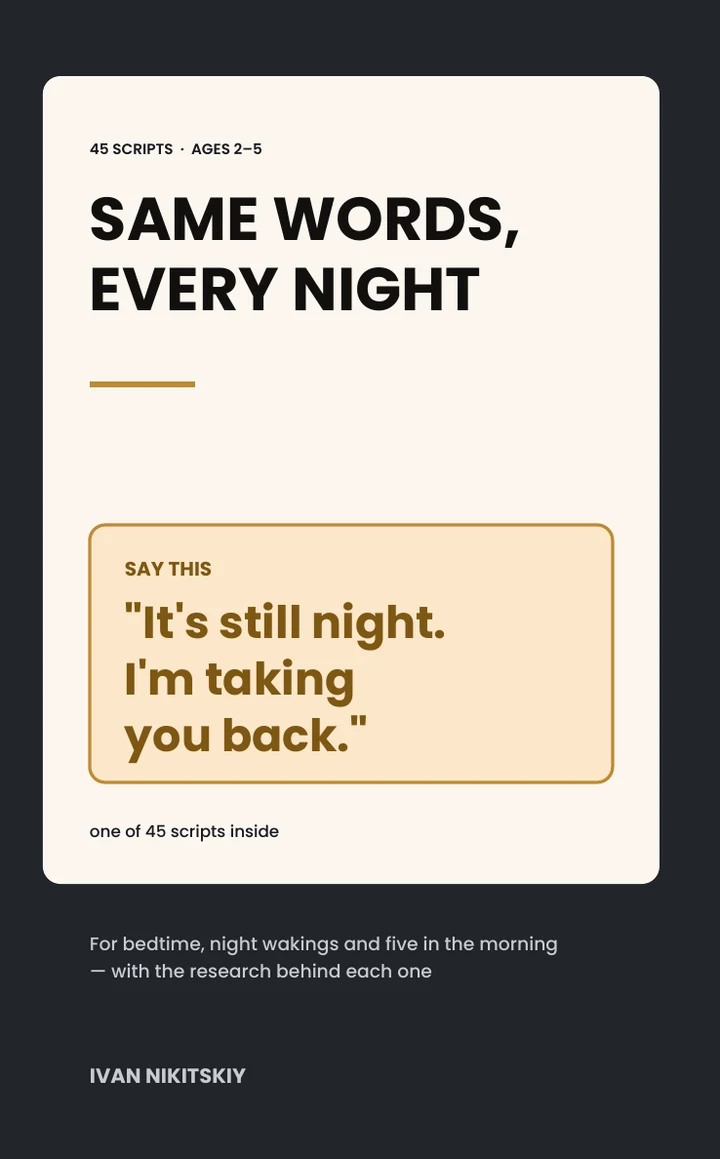
“It's still night. I'm taking you back.”
The same sentence in the same flat voice. The dullness is the method.
“I'll come and check on you.”
Gives them something to wait for that does not require you to stay.
Do this
- Walk them back without conversation, with the lights left off.
- Work on bedtime first — the waking is usually made at eight in the evening.
- Decide in advance who goes, and take turns by night, not by who wakes first.
- Keep the room worth returning to: water in reach, a light they control.
- Say nothing new at that hour — new information restarts the night.
Avoid this
- Taking them into your bed only on the worst nights — sometimes works better than always, and they will hold out for it.
- "Go back to bed!" called from under your covers — a voice from another room is a reason to keep coming.
- Asking what is wrong at three in the morning — the question invites an answer, and the answer takes twenty minutes.
If it repeats
Arrivals at the same time every night are usually a habit of timing rather than a need. Keep the return identical for two weeks and watch the length before the frequency — the visits get shorter well before they get rarer.
Why the book suggests this
Everyone surfaces between sleep cycles. What decides whether it becomes a visit is what has to be true for sleep to come back. If falling asleep at eight required you, three in the morning requires you too.
Sadeh's work found the difference is not how often children wake. It is what they need next. A child who went down without an adult in the room surfaces just as often and settles without calling, because nothing is missing when they check.

From this collection
Same Words: Every Night
45 prepared situations in this family area.