Author’s practical guidance

An aunt reaches for a hug and they go stiff

Source named in the book: RIE (Gerber)

A small child at a family gathering is surrounded by people who love them and whom they have met four times.

Say this now

Option 1
“He's deciding. Give him a minute.”

To the adult, over the child's head, in a friendly voice.

Option 2
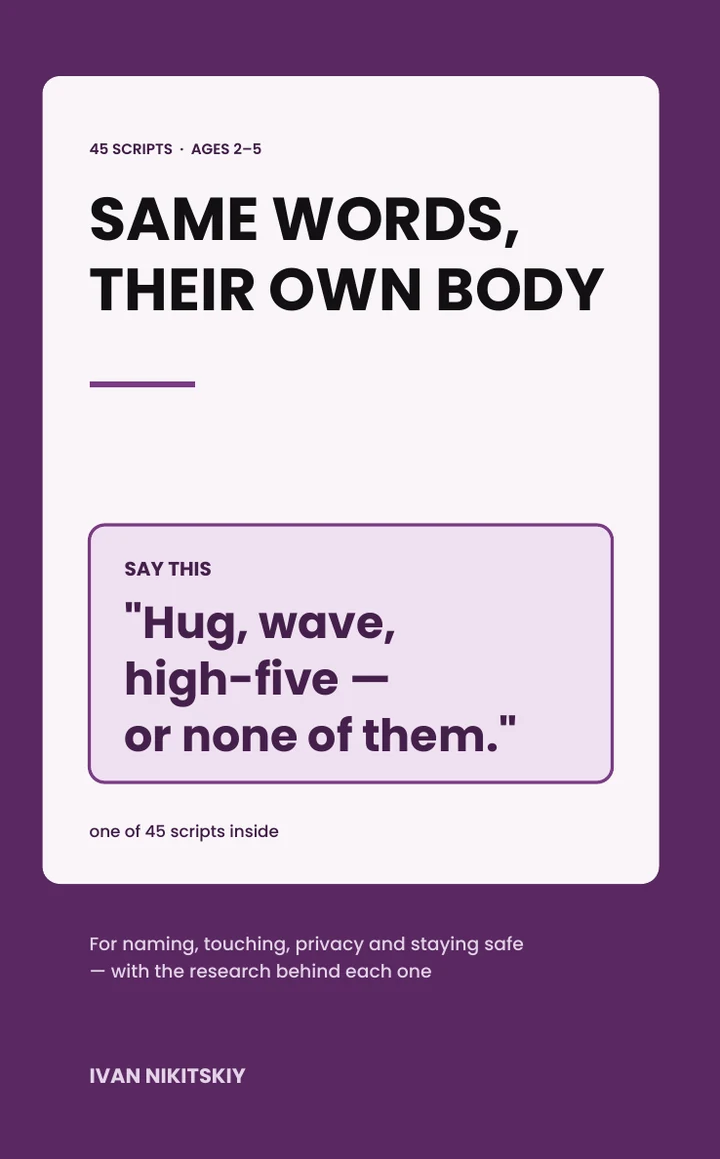
“Hug, wave, high-five — or none of them. You pick.”

Four options, and the last one is real. Say it too.

Do this

  • Get in front of the arms. Answer the adult, not the child.
  • Crouch to their height first. Being at eye level changes what they can refuse.
  • Warm up the adult, not the child: "Ask him first — he loves being asked."
  • Let the visit start at a distance. Most children close it themselves within the hour.
  • Say the same thing at home when you want a cuddle. The rule covers you too.

Avoid this

  • "Don't be rude, give her a hug." Teaches that politeness outranks their own no.
  • "Sorry, he's shy." Explains the child away in front of them, and hands them a label.
  • A hand in the small of the back, pushing them forward. The body remembers being moved.
If it repeats

If one relative keeps overriding it, have the conversation away from the party: this is what we are teaching, here is the sentence, please use it. Most people take it well away from the child.

Why the book suggests this

A small child at a family gathering is surrounded by people who love them and whom they have met four times. The arms arrive faster than the recognition does, and the body answers before anyone has asked it anything.

The approach to infant and toddler care that has argued this longest makes one demand of adults: tell a child what you are about to do to their body before you do it. Applied at a birthday party, that single rule settles most of this, and it is aimed at the grown-ups rather than the child.

From this collection

Same Words: Their Own Body

45 prepared situations in this family area.