Author’s practical guidance
Hitting or pushing other kids
Source named in the book: PCIT · Emotion coaching (Gottman)
At two and three the impulse arrives before the words do.
Say this now
“I won't let you hit. Hitting hurts.”
Said while you are standing between them. Short, factual, no shame.
“You wanted the truck. Words or my help — not hands.”
Name the want, then give the two legitimate routes to it.
Do this
- Move between the children first, talk second.
- Check the hurt child in front of yours. Attention follows what you want to teach.
- Then help repair: bring a tissue, offer the toy back, sit together.
- Give the apology a job instead of a word: "What can you do to help her feel better?"
- Keep your voice quieter than the situation.
Avoid this
- "Say sorry!" — forced apologies teach performance, not empathy.
- "How would you like it if someone hit YOU?" — requires perspective-taking that arrives years later.
- Marching them over for a public apology in front of the other parent.
If it repeats
Shadow closely at playdates for a while and step in before the swing. Catching the moment before is worth more than correcting after — two weeks of close supervision teaches more than three months of consequences.
Why the book suggests this
At two and three the impulse arrives before the words do. A child who wants the truck has the feeling, the plan and the arm all working before the sentence "can I have that" has finished assembling. Hitting is a skills gap, not a character flaw.
The second thing worth knowing is that your attention is the strongest tool in the room. Whichever child gets it first is the one whose behavior you are teaching — and by reflex we give it to the one who hit.
Related prepared situations
What happened next?

From this collection
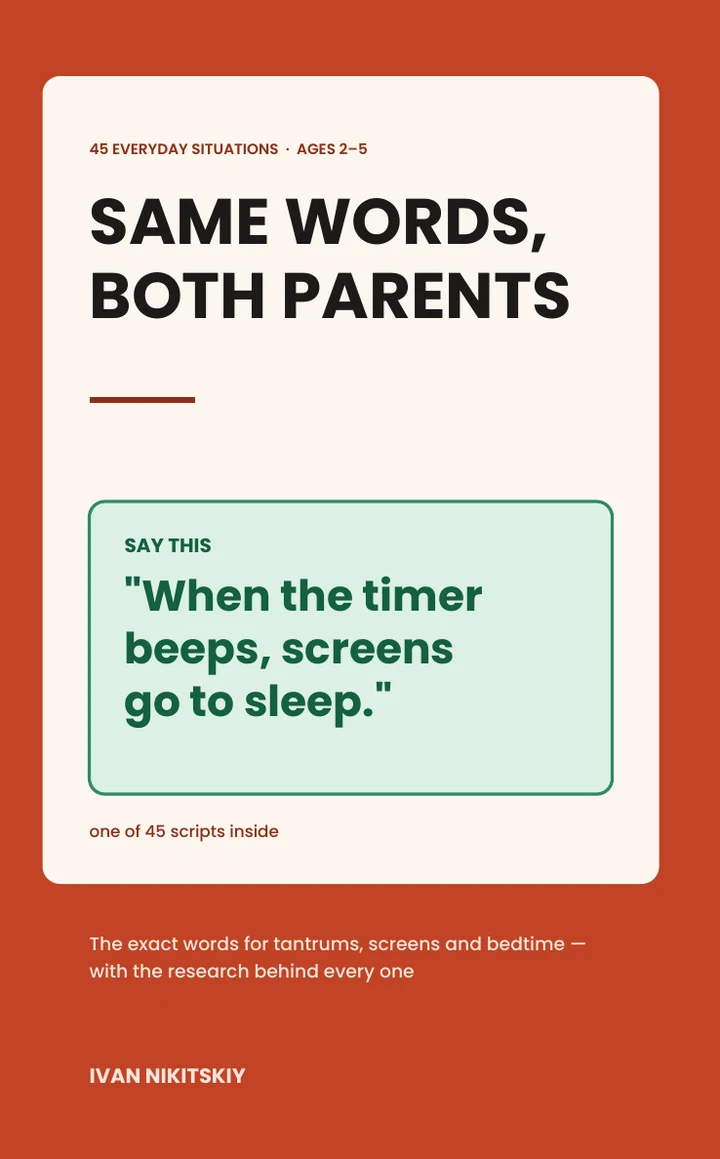
Same Words: Both Parents
45 prepared situations in this family area.